Introduction
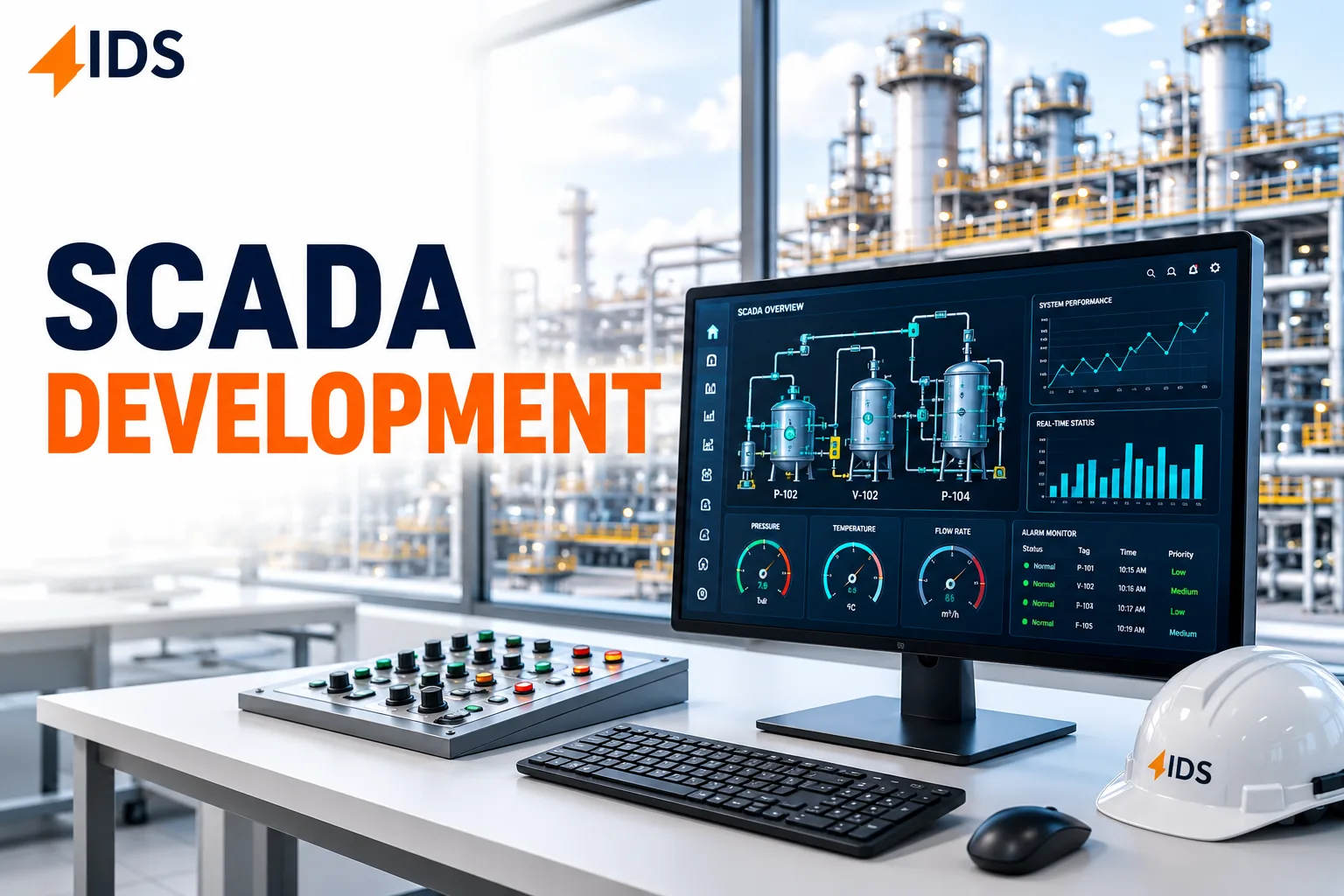
SCADA Development is the foundation of modern industrial automation, enabling businesses to monitor, control, and optimize industrial processes in real time. From manufacturing plants to water treatment facilities and power stations, SCADA systems collect data from machines, PLCs, and sensors to provide operators with complete operational visibility. A well-designed SCADA solution improves productivity, minimizes downtime, and supports smarter business decisions.
Why SCADA Development Matters
Modern industries rely on automation to maintain efficiency and reliability.
A professional SCADA Development solution provides:
- Real-time equipment monitoring
- Centralized process control
- Automated alarm management
- Historical data logging
- Production analytics
- Remote monitoring
- Better operational visibility
- Improved safety
These capabilities help organizations reduce operational costs while increasing productivity.
SCADA Development Features
A modern SCADA platform includes numerous advanced capabilities.
Core features include:
- Human Machine Interface (HMI)
- PLC Integration
- RTU Connectivity
- Alarm & Event Management
- Historical Data Storage
- Trend Analysis
- Reporting Dashboard
- Secure User Management
- Cloud Connectivity
- Remote Access
- Industrial Network Integration
- API Connectivity
These features allow operators to manage industrial assets from a single dashboard.
Real-Time Monitoring and Control
One of the biggest advantages of SCADA Development is continuous monitoring of industrial operations.
Businesses can:
- Monitor production lines
- Track machine health
- View live process data
- Receive instant alarms
- Analyze equipment performance
- Improve production efficiency
Real-time dashboards help engineers identify problems before they become costly failures.
PLC and Industrial IoT Integration
Modern SCADA systems integrate seamlessly with:
- PLC Controllers
- Industrial IoT Sensors
- RTU Devices
- Smart Meters
- MES Software
- ERP Systems
- Cloud Platforms
- Digital Twin Solutions
Integration enables connected factories that support Industry 4.0 initiatives.
Industries Using SCADA Development
SCADA solutions are widely used across multiple industries.
Common sectors include:
- Manufacturing
- Oil & Gas
- Water & Wastewater
- Power Generation
- Pharmaceuticals
- Chemical Processing
- Food & Beverage
- Mining
- Building Management
- Renewable Energy
Each industry benefits from increased automation, improved safety, and higher operational efficiency.
Why Choose 4IDS?
At 4IDS, we build customized SCADA Development solutions tailored to industrial automation requirements.
Our expertise includes:
- SCADA Development
- PLC Programming
- Industrial IoT Platform
- Embedded AI Solutions
- Digital Twin Development
- Predictive Maintenance AI
- IoT Dashboard Development
- Website Development
- SEO Services
- Digital Marketing
We deliver secure, scalable, and future-ready industrial automation solutions.
Frequently Asked Questions
What is SCADA Development?
SCADA Development is the process of designing software that monitors, controls, and manages industrial equipment through centralized dashboards and automation systems.
What industries use SCADA systems?
Manufacturing, energy, water treatment, oil and gas, pharmaceuticals, mining, logistics, and infrastructure industries all rely on SCADA systems.
Can SCADA integrate with PLCs?
Yes. SCADA integrates with PLCs, RTUs, Industrial IoT devices, cloud platforms, and enterprise software.
Is SCADA suitable for remote monitoring?
Yes. Modern cloud-enabled SCADA systems provide secure remote monitoring and control from anywhere.
Conclusion
SCADA Development plays a vital role in digital manufacturing by connecting machines, collecting operational data, and improving industrial decision-making. Organizations adopting advanced SCADA solutions benefit from higher productivity, improved equipment reliability, and reduced operational costs.
At 4IDS, we specialize in developing intelligent SCADA solutions that help businesses embrace Industry 4.0, optimize production, and achieve long-term operational excellence.