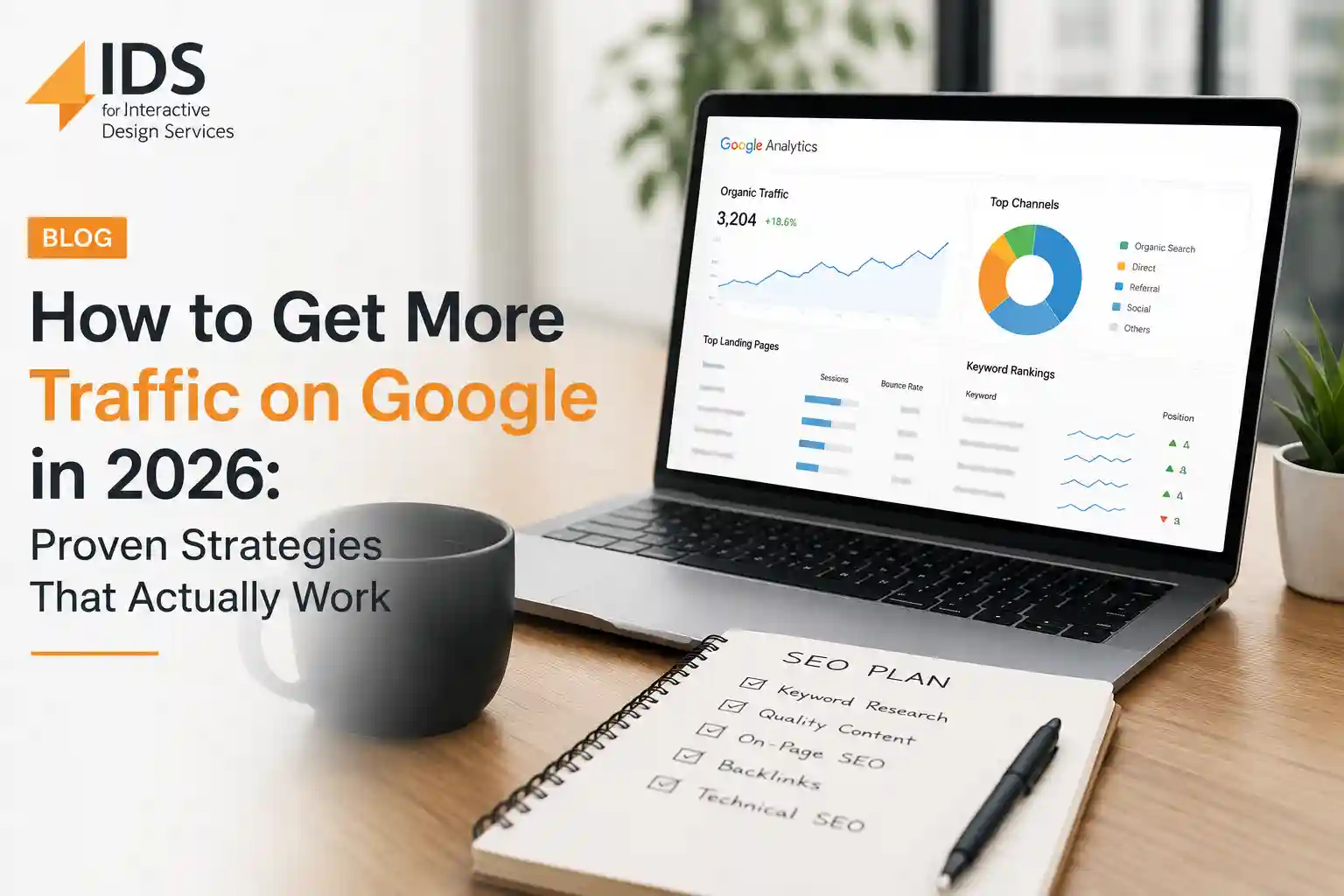
If you’ve built a website and are waiting for visitors to magically appear, you’re not alone. Thousands of businesses launch websites every year, but only a small percentage receive consistent traffic from Google. The difference isn’t luck—it’s strategy.
Google processes billions of searches every day, and its mission is simple: deliver the most relevant, trustworthy, and helpful content to users. That means businesses that genuinely solve customer problems, create valuable content, and maintain technically sound websites have the best chance of earning top rankings.
In 2026, getting more traffic on Google isn’t about stuffing keywords or publishing hundreds of low-quality blog posts. It’s about understanding user intent, building authority, optimizing every page, and creating an exceptional user experience.
In this guide, you’ll learn practical strategies that businesses of any size can implement to increase organic traffic, improve search rankings, and turn visitors into qualified leads.
Why Google Traffic Is More Valuable Than Paid Traffic
Paid advertising can bring visitors instantly, but the traffic stops the moment you stop spending. Organic Google traffic works differently. Once your pages rank well, they can continue attracting visitors for months or even years with ongoing optimization.
Organic traffic also builds trust. Many users skip advertisements and click organic search results because they believe they provide more reliable information. If your business consistently appears in search results, customers naturally begin to recognize your brand as an authority.
The biggest advantage is quality. People searching on Google already have a problem they want to solve. If your website provides the right answer, you’re attracting visitors who are much more likely to become customers.
Understand Search Intent Before Writing Anything
One of the biggest mistakes businesses make is creating content based only on keywords instead of understanding what users actually want.
For example, someone searching “What is SEO?” is looking for information. Someone searching “SEO services in Hyderabad” is looking for a company to hire.
Google understands this difference.
Before writing any blog, ask yourself:
- Is the user looking for information?
- Are they comparing solutions?
- Are they ready to buy?
- What problem are they trying to solve?
Your content should answer these questions better than competing websites.
Create Content That Solves Real Problems
Google rewards helpful content.
Instead of writing short articles filled with generic advice, create comprehensive guides that answer common questions, explain concepts clearly, and provide practical solutions.
Good content includes:
- Step-by-step instructions
- Real business examples
- Actionable tips
- FAQs
- Visuals
- Statistics
- Internal links to related resources
Ask yourself:
“Would someone bookmark this article or share it with a colleague?”
If the answer is no, improve it before publishing.
Target Long-Tail Keywords Instead of Broad Keywords
Many businesses try to rank for extremely competitive keywords such as SEO or Digital Marketing.
These keywords are dominated by websites with years of authority.
Instead, focus on long-tail keywords such as:
- Website development company in Hyderabad
- SEO services for startups
- Digital marketing for real estate companies
- How to improve website speed
- Local SEO checklist for small businesses
Long-tail keywords usually have lower competition and higher conversion rates because they match specific user needs.
Build Topic Clusters Instead of Random Blogs
Publishing unrelated blog posts makes it difficult for Google to understand your expertise.
Instead, organize your content around core topics.
For example, if your business offers SEO services, create a pillar page on SEO for Businesses and support it with related articles such as:
- Technical SEO Guide
- Local SEO Checklist
- Keyword Research Tips
- On-Page SEO Best Practices
- How to Write SEO-Friendly Blogs
- Common SEO Mistakes
This approach strengthens your website’s authority and improves internal linking.
Improve Your On-Page SEO
Every page on your website should be optimized before publishing.
Your page should include:
- A descriptive title tag
- A compelling meta description
- One H1 heading
- Well-structured H2 and H3 headings
- Optimized images with descriptive alt text
- Internal links
- A clear call-to-action
Remember, SEO is not just about search engines. Your content should also be easy for real people to read and understand.
Make Your Website Fast
Website speed has become an important ranking factor.
Slow websites frustrate visitors and increase bounce rates.
Simple improvements include:
- Compress images
- Enable browser caching
- Use modern image formats such as WebP
- Minify CSS and JavaScript
- Choose reliable hosting
- Remove unnecessary plugins
A fast website not only ranks better but also improves user satisfaction.
Prioritize Mobile Experience
More than half of Google searches now happen on mobile devices.
Your website should:
- Load quickly on smartphones
- Have readable text
- Include large buttons
- Display forms correctly
- Avoid intrusive pop-ups
Google primarily evaluates the mobile version of your website, so mobile optimization is no longer optional.
Strengthen Your Internal Linking Strategy
Internal links help users discover more content while helping search engines understand your website structure.
For example, if someone is reading this article and wants professional assistance, you can naturally guide them to your services.
Need help improving your website’s Google rankings? Explore our SEO and Website Development services or visit our Contact Us page to discuss your business goals with the 4IDS team.
Internal Link Suggestion:
https://4ids.in/contact-us/
This improves navigation and supports your conversion goals.
Earn High-Quality Backlinks
Backlinks remain one of Google’s strongest ranking signals.
Instead of buying backlinks, focus on earning them naturally by creating valuable content.
Ideas include:
- Original research
- Industry reports
- Case studies
- Free tools
- Templates
- Checklists
When your content provides unique value, other websites are more likely to reference it.
Optimize Your Google Business Profile
If you serve local customers, your Google Business Profile is just as important as your website.
Keep it updated by:
- Posting weekly updates
- Adding high-quality photos
- Responding to reviews
- Updating business information
- Answering customer questions
This improves your local visibility and helps potential customers trust your business.
Monitor Your Performance
SEO is not a one-time task.
Track important metrics such as:
- Organic traffic
- Keyword rankings
- Click-through rate
- Bounce rate
- Average engagement time
- Leads generated
- Conversion rate
Use tools like Google Analytics and Google Search Console to identify opportunities and continuously improve your strategy.
Common SEO Mistakes to Avoid
Many businesses unknowingly limit their growth by making avoidable mistakes.
Avoid:
- Publishing thin content
- Ignoring mobile users
- Copying content from competitors
- Keyword stuffing
- Broken internal links
- Slow-loading pages
- Missing meta descriptions
- Forgetting image optimization
SEO is about consistency and quality—not shortcuts.
Frequently Asked Questions
How long does SEO take to show results?
Is blogging still important in 2026?
Yes. High-quality blogs remain one of the best ways to increase organic traffic, answer customer questions, and demonstrate expertise.
How many blogs should I publish each month?
Quality matters more than quantity. Publishing two to four comprehensive articles each month is generally more effective than publishing many short, low-value posts.
Can I do SEO without paid advertising?
Absolutely. Organic SEO and paid advertising serve different purposes. Many businesses successfully generate leads through SEO alone by consistently publishing valuable content and optimizing their websites.
Final Thoughts
Getting more traffic on Google in 2026 isn’t about finding secret ranking tricks. It’s about creating a website that genuinely helps users, answers their questions, and provides an outstanding experience from the first click.
Focus on understanding your audience, publishing high-quality content, improving your website’s technical performance, and building topical authority over time. These strategies may require patience, but they create sustainable results that continue to generate traffic and leads long after the content is published.
If you’re looking to improve your website’s search performance, increase qualified traffic, or build a stronger online presence, 4IDS can help. Whether you need SEO services, website development, or a complete digital marketing strategy, visit our Contact Us page to discuss your goals and discover how we can support your business growth.